
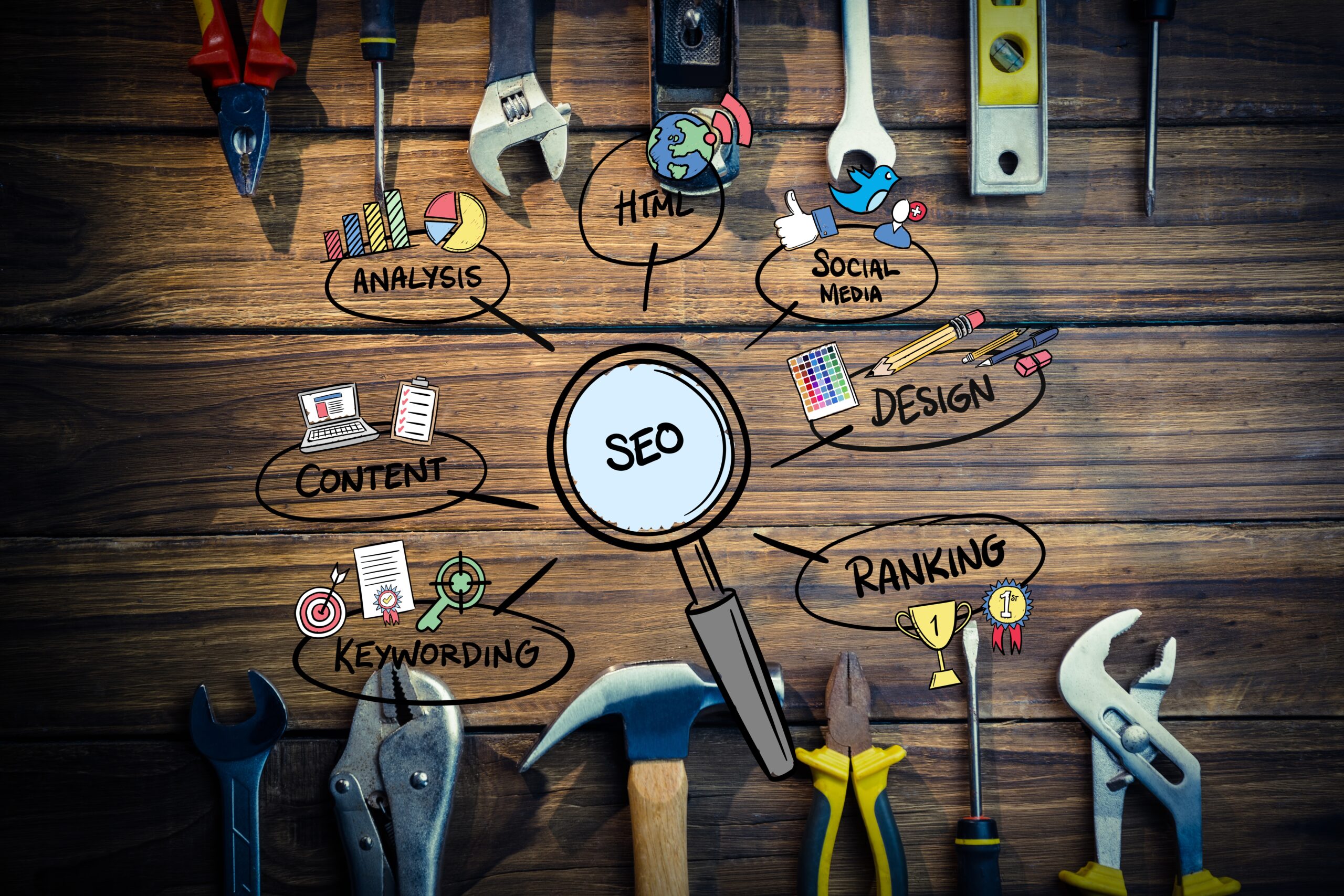
Artificial Intelligence (AI) has completely changed the way SEO works. Traditional SEO focused mainly on keywords, backlinks, and basic on-page optimization. Today, AI SEO uses machine learning, data analysis, and automation to improve rankings, increase organic traffic, and target high-volume, high-intent keywords more accurately.
AI SEO tools help businesses improve search rankings by using artificial intelligence to automate keyword research, content optimization, competitor analysis, and technical SEO. These tools analyze large datasets faster than manual methods, making SEO more accurate and scalable.
Modern AI SEO tools focus on search intent, keyword volume, SERP analysis, and content quality, which are critical for ranking in Google’s AI-driven algorithms.
How AI SEO Tools Work
AI-powered SEO tools use machine learning to:
- Identify high-volume, low-competition keywords
- Analyze top-ranking competitors
- Optimize content structure & readability
- Suggest semantic and related keywords
- Improve on-page & technical SEO
- Track ranking opportunities in real time
Best AI SEO Tools
Here are some of the most popular AI SEO tools used by agencies
- Surfer SEO – AI content optimization & on-page SEO
- Semrush AI – Keyword research, competitor analysis, and SEO automation
- Ahrefs – AI-backed backlink & keyword data
- Clearscope – Content optimization for high-volume keywords
- Frase – AI content briefs & FAQ optimization
- RankMath AI – AI SEO for WordPress websites
Benefits of Using AI SEO Tools
- Faster keyword volume analysis
- Better content optimization for Google
- Improved ranking accuracy
- Time-saving automation
- Higher organic traffic & conversions
AI SEO tools are especially useful for small businesses, eCommerce stores, and service-based companies in the USA.
AI SEO Tools Comparison Table
| AI SEO Tool | Best For | Key Features | Ideal Users | Pricing Level |
|---|---|---|---|---|
| Surfer SEO | Content Optimization | AI content editor, NLP keywords, SERP analyzer, content score | Bloggers, SEO agencies | Medium |
| Semrush AI | All-in-One SEO | Keyword research, competitor analysis, AI writing assistant, site audit | Businesses & agencies | Medium–High |
| Ahrefs | Keyword & Backlinks | Keyword volume, backlink analysis, SERP difficulty, competitor tracking | Advanced SEO professionals | High |
| Clearscope | High-Quality Content | Content grading, semantic keywords, readability optimization | Content teams, publishers | High |
| Frase | AI Content Briefs | AI outlines, FAQs, search intent analysis, content optimization | Bloggers & small teams | Medium |
| RankMath AI | WordPress SEO | AI content suggestions, schema, on-page SEO, keyword optimization | WordPress websites | Low–Medium |
| Yoast AI | On-Page SEO | AI title/meta suggestions, readability checks | Beginners | Low |
| Scalenut | AI Content + SEO | Topic clusters, keyword planning, long-form AI content | Startups & marketers | Mediu |
Which AI SEO Tool Should You Choose?
- Best for Content Optimization: Surfer SEO, Clearscope
- Best All-in-One AI SEO Tool: Semrush AI
- Best for WordPress: RankMath AI
- Best for Beginners: Yoast AI, Frase
- Best for Agencies: Ahrefs, Semrush AI
For Small Businesses
Small businesses should focus on:
- Easy-to-use interface
- Keyword volume + intent analysis
- On-page optimization
- Affordable pricing
Recommended Tools:
RankMath AI, Frase, Yoast AI
For SEO Agencies
Agencies need scalable and data-heavy tools:
- Competitor analysis
- Bulk keyword research
- SERP tracking
- Client reporting
Recommended Tools:
Semrush AI, Ahrefs, Surfer SEO
For eCommerce Websites
eCommerce SEO requires:
- Product keyword optimization
- Category page SEO
- Conversion-focused keywords
- Technical SEO insights
Recommended Tools:
Semrush AI, Ahrefs, Clearscope
AI SEO Tools vs Traditional SEO Tools
| Feature | Traditional SEO | AI SEO Tools |
|---|---|---|
| Keyword Research | Manual & limited | Automated & data-driven |
| Search Intent | Guess-based | AI-powered analysis |
| Content Optimization | Keyword-focused | Semantic & intent-based |
| Speed | Slow | Fast |
| Scalability | Limited | Highly scalable |
AI SEO tools clearly outperform traditional SEO methods when it comes to speed, accuracy, and scalability.
AI SEO Tools for Keyword Volume & Buyer Intent
One of the biggest advantages of AI SEO tools is accurate keyword volume analysis combined with buyer intent detection.
AI tools help identify:
- High-volume keywords with commercial intent
- Long-tail keywords that convert
- Question-based keywords for FAQs
- Local & USA-focused keywords
This makes them ideal for lead generation and sales-driven SEO.
Common Mistakes When Using AI SEO Tools
Avoid these mistakes to get the best results:
- Relying fully on AI-generated content
- Ignoring human editing & strategy
- Over-optimizing keywords
- Using too many tools at once
- Not tracking conversions
AI SEO tools work best when combined with expert SEO strategy.
AI SEO Tools for Local SEO (USA)
Local businesses in the USA can use AI SEO tools to:
- Optimize Google Business Profiles
- Target local high-volume keywords
- Improve local rankings
- Generate local leads
Best Tools for Local SEO:
Semrush AI, RankMath AI, BrightLocal (AI-assisted)
Future of AI SEO Tools
AI SEO tools will continue to evolve with:
- Better search intent prediction
- Voice & visual search optimization
- AI-powered link-building insights
- Real-time SERP change tracking
Businesses using AI SEO tools early will have a major competitive advantage.
FAQs:
Are AI SEO tools worth the investment?
Yes. AI SEO tools save time, improve accuracy, and help target high-converting keywords, making them cost-effective long-term.
Can AI SEO tools improve conversions?
Yes. By targeting buyer-intent keywords and optimizing content structure, AI SEO tools increase both traffic and conversions.
Do AI SEO tools work for new websites?
Yes. AI SEO tools help new websites find low-competition, high-volume keywords faster.
How many AI SEO tools should I use?
1–2 tools are enough. Using too many tools can create confusion and overlap.